Independent practical guide

Can You Insure a Dog with Diabetes?

Separate buying a policy from obtaining payment for a dog’s existing diabetes.

Policy-first Independent Useful checks
Key checks

What matters on this page

Use these checkpoints to frame the literal question before reading the full guide.

Enrollment Product-specific decision Acceptance is not a claim result
Diabetes history Dates and prior signs Keep medical records
Ongoing costs Itemize each expense Do not assume one answer
Direct answer

A dog with diabetes may raise two separate insurance questions: whether a product will accept the dog, and whether diabetes-related expenses would qualify. Do not treat an enrollment offer as proof that an already diagnosed condition is covered. Read the pre-existing-condition definition against the actual history and request a written answer about the expenses you need help funding.

The sections below show how to verify the answer and what can change it.

Start with the exclusion definition and the timeline

The Pets Best specimen IAIC-PB10001-ILL, section 5.A.1, refers to earlier advice, treatment or directly related signs before the effective date or during a waiting period. A later diagnostic label therefore cannot be assumed to erase earlier signs. This is one specimen illustration, not a decision for every dog or insurer.

Make a timeline from the records already available: first relevant observation, first veterinary discussion, testing, diagnosis, treatment start, policy effective date and any applicable waiting period. Where a date is uncertain, label it uncertain. Keep the veterinarian’s medical explanation separate from the insurer’s interpretation of its contract.

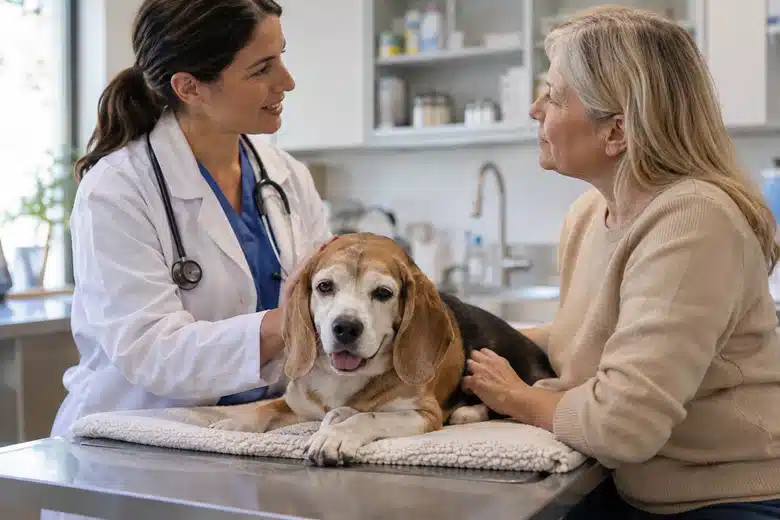
Beagle resting during a veterinary discussion of ongoing care
Generated editorial illustration. Separate buying a policy from obtaining payment for a dog’s existing diabetes.
Evidence matrix

Diabetes expense questions

Invoice item Indication/history Relevant provision Inclusion/exclusion evidence Unresolved question
Diagnostic tests Initial investigation or later evaluation Diagnostics and prior-history terms Clinical notes and dates How is this episode classified?
Insulin Prescribed management of diabetes Medication benefit and exclusions Prescription, formulary and selected benefit Does the underlying condition qualify?
Monitoring Glucose tests and ongoing checks Tests, supplies and device definitions Itemized charges and explicit wording Are supplies or devices treated differently?
Follow-up Scheduled disease-management visit Consultation or exam-fee benefit Schedule and clinical record Is the visit fee a selected benefit?

Diagnostic tests

Indication/history Initial investigation or later evaluation
Relevant provision Diagnostics and prior-history terms
Inclusion/exclusion evidence Clinical notes and dates
Unresolved question How is this episode classified?

Insulin

Indication/history Prescribed management of diabetes
Relevant provision Medication benefit and exclusions
Inclusion/exclusion evidence Prescription, formulary and selected benefit
Unresolved question Does the underlying condition qualify?

Monitoring

Indication/history Glucose tests and ongoing checks
Relevant provision Tests, supplies and device definitions
Inclusion/exclusion evidence Itemized charges and explicit wording
Unresolved question Are supplies or devices treated differently?

Follow-up

Indication/history Scheduled disease-management visit
Relevant provision Consultation or exam-fee benefit
Inclusion/exclusion evidence Schedule and clinical record
Unresolved question Is the visit fee a selected benefit?

Keep the care plan outside the insurance negotiation

AVMA describes diabetes diagnosis using blood and urine testing, and ongoing management using veterinary monitoring, insulin and dietary therapy as appropriate. Do not change prescribed treatment, medication timing or monitoring to try to improve an insurance application. Decisions about a dog’s clinical care belong with the veterinarian.

A useful budget lists recurring medicines, testing, follow-up and unexpected care separately. Put a blank beside reimbursement that has not been verified rather than counting it as expected income. Ask the clinic to clarify an unfamiliar invoice label, but do not request a different diagnosis or misleading description to fit a benefit.

Compare with the details in front of you

Ready to check current rates?

Keep policy terms, deductible, reimbursement and limits beside the quote so the comparison stays consistent.

Find Coverage for Your Pet

Ask about new unrelated events without assuming their answer

An owner may still want protection against future events unrelated to diabetes. Ask whether the dog can enroll and how the policy defines related conditions. Do not infer that every future problem is excluded, and do not infer that every different diagnosis is unrelated. The contract, medical facts and a proper review are needed to decide those boundaries.

If the dog is already insured, start with that existing contract before considering replacement. Gather renewal terms and the history of any diabetes claim. A new policy can require a fresh assessment; an advertised lower premium alone is not evidence that the same condition remains eligible. No replacement recommendation is made here.

Checklist

Written questions for a meaningful answer

Will this product accept this dog’s actual age, residence and disclosed history?
Which provision addresses the existing diabetes?
How are related conditions defined and assessed?
How are insulin, monitoring supplies and examination fees classified?
Which documents are needed for a decision?
Does the answer concern enrollment, a specific expense, or both?

Individual coverage remains unresolved

No current applicable product packet, dog-specific eligibility result or written diabetes determination was obtained. This guide cannot promise payment for diabetes or guarantee that a dog can enroll.

FAQ

Common questions

Can enrollment mean diabetes is still excluded?

Yes. Treat eligibility to buy and eligibility of diabetes expenses as separate questions.

Should I wait to seek care until a policy starts?

No. Follow veterinary advice and keep an accurate history; do not delay care for an insurance decision.

Pet Insurance Lens

Ready to compare with clearer inputs?

Keep the policy terms beside the price, then continue to rates when the comparison is clear.

See Insurance Rates